
Uncategorized
Understanding Quadriceps Impairment After Knee Surgery
Nov
Total knee arthroplasty (TKA) and anterior cruciate ligament (ACL) reconstruction are among the most common orthopedic surgical procedures performed worldwide.
While these surgeries are highly successful in addressing knee pathologies, they often result in significant quadriceps muscle impairment during the postoperative period.
This comprehensive analysis explores the mechanisms behind quadriceps weakness, its impact on patient outcomes, and evidence-based rehabilitation strategies.
Quadriceps Impairment Following Total Knee Arthroplasty
Initial Postoperative Period
The first month following TKA is particularly crucial, as patients experience their most severe quadriceps weakness during this time.
Research has consistently shown that patients can lose up to 60% of their preoperative quadriceps strength during this period.
This dramatic decrease in muscle function can significantly impact:
- Mobility & Balance
- Daily activities, Quality of life
- Risk of falls
- Overall recovery trajectory
Primary Mechanisms of Quadriceps Impairment
The impairment of quadriceps function after TKA can be attributed to two main mechanisms:
a) Failure of Voluntary Muscle Activation
- Neural inhibition
- Altered motor unit recruitment
- Reduced nerve signaling efficiency
- Pain-related inhibition
- Swelling-induced activation failure
The failure of voluntary muscle activation following knee surgery can be a frustrating and discouraging experience for many patients. This inability to fully engage their muscles can lead to weakness, decreased range of motion, and difficulty performing everyday activities. There are several reasons why this may occur, with reduced nerve signaling efficiency being a common factor.
Nerve signaling efficiency can be compromised following surgery due to various factors such as nerve damage, inflammation, or the body’s natural response to trauma.
When nerve signaling is impaired, the communication between the brain and muscles is disrupted, leading to decreased muscle activation. This can result in muscle atrophy, decreased strength, and impaired function.
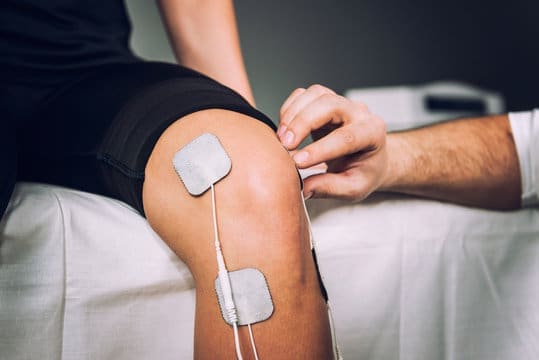
Physical therapy is often recommended following knee surgery to help restore proper nerve signaling and improve muscle activation. More recently favorable treatments such as electrical stimulation may be utilized to help facilitate muscle activation.
b) Muscle Atrophy
- Reduced muscle fiber size
- Decreased muscle mass
- Changes in muscle architecture
- Altered muscle protein synthesis
After knee surgery, muscle atrophy is a common concern for patients, leading to reduced muscle fiber size, decreased muscle mass, and changes in muscle architecture.
This loss of muscle strength and function can significantly impact a patient’s recovery and overall quality of life.
To address these challenges, many healthcare providers recommend the use of neuromuscular electrical stimulation (NMES) as part of the rehabilitation process.
Muscle Loss After ACL Surgery
Mechanisms of Muscle Loss
ACL reconstruction surgery can lead to significant muscle loss through various mechanisms:
a) Immobilization:
- Reduced weight-bearing
- Limited range of motion
- Decreased muscle use
- Altered movement patterns
After surgery, immobilization remains a factor although is crucial to promote healing and prevent complications, allowing the body to recover effectively.
b) Reduced Activity Levels:
- Protected weight-bearing period
- Limited exercise capacity
- Decreased daily activities
- Modified movement strategies
Reduced activity levels after surgery are essential to facilitate recovery, minimize strain on the healing tissues, and lower the risk of complications.
c) Pain-Related Factors:
- Protective muscle guarding
- Reduced voluntary activation
- Altered movement patterns
- Limited exercise participation
Pain-related factors after surgery can significantly impact recovery, as they may affect mobility, interfere with rehabilitation efforts, and influence a patient’s overall well-being.
Timeline of Muscle Loss
The progression of muscle loss following ACL surgery typically follows a pattern:
Early Phase (0-2 weeks):
- Rapid loss of muscle mass
- Significant strength deficits
- Limited voluntary activation
- Maximum pain and swelling
Middle Phase (2-6 weeks):
- Continued muscle atrophy
- Improving activation patterns
- Decreasing pain levels
- Beginning of active rehabilitation
Late Phase (6-12 weeks):
- Stabilization of muscle loss
- Improving strength measures
- Enhanced activation patterns
- Progressive rehabilitation
Importance of Quadriceps Function
Quadriceps function is vital for overall lower limb mobility, stability, and strength. The quadriceps muscle group, located at the front of the thigh, consists of four muscles that work together to extend the knee, making it essential for activities such as walking, running, jumping, and climbing stairs.
Proper quadriceps function is particularly important in rehabilitation following knee injuries or surgeries, such as ACL reconstruction or total knee replacement. A strong and functional quadriceps helps to support the knee joint, reducing the risk of instability and further injury. Additionally, maintaining quadriceps strength can alleviate excess stress on other structures in the knee, such as ligaments and cartilage, thereby promoting long-term joint health.
Moreover, adequate quadriceps strength is crucial for athletes and active individuals, as it contributes to optimal performance and injury prevention. Weakness in this muscle group can lead to compensatory movements, increasing the likelihood of overuse injuries in other muscles and joints.
In older adults, preserving quadriceps function is essential for maintaining independence and preventing falls. A decline in muscle strength can lead to mobility limitations and a higher risk of falls, which can have serious consequences. Therefore, focusing on quadriceps strength and function is important especially after surgery.
Long-term Success Predictors
The function of the quadriceps muscle is crucial for successful outcomes after knee surgery for several reasons:
Functional Performance:
- Walking ability
- Stair climbing
- Standing from sitting
- Balance control
Functional performance after knee surgery is critical for a successful recovery and the overall quality of life. Following procedures such as knee arthroscopy, ligament reconstruction, or total knee replacement, patients often experience significant changes in mobility and strength. Prioritizing functional performance—defined as the ability to perform daily activities effectively—is essential for regaining independence and confidence.
Improving functional performance involves enhancing strength, flexibility, and balance. This is particularly important for activities such as walking, climbing stairs, and getting in and out of a chair, which are fundamental to daily living. Rehabilitation programs that focus on functional tasks help patients rebuild the neuromuscular pathways needed for coordinated movement, thereby promoting quicker recovery.
Additionally, good functional performance reduces the risk of complications, such as falls or re-injury, that can arise from weakened muscles or impaired coordination. Engaging in functional exercises can also enhance joint stability and promote proper movement patterns, which are crucial for long-term joint health.
Successful functional performance can lead to improved psychological well-being, as patients regain their autonomy and return to the activities they enjoy. Therefore, a focus on functional performance after knee surgery is vital for achieving optimal recovery outcomes and enhancing overall quality of life.
Joint Protection:
- Shock absorption
- Joint stability
- Movement control
- Load distribution
Joint protection after knee surgery is crucial for preserving the integrity of the knee joint and ensuring optimal recovery, particularly regarding the role of the quadriceps muscle. The quadriceps play a vital role in stabilizing and supporting the knee during movement. After surgery, the knee joint is often vulnerable to stress and instability, making effective quadriceps function essential for joint protection.
Strengthening the quadriceps can alleviate undue pressure on the knee joint, reducing the risk of complications such as swelling, pain, and further injury. A well-functioning quadriceps helps absorb the impact during activities like walking, ascending stairs, and squatting, distributing forces away from the knee. This distribution is critical for minimizing wear and tear on the cartilage and ligaments that support the joint.
Additionally, focusing on joint protection strategies, such as proper body mechanics and controlled movements, can enhance recovery outcomes. Rehabilitation exercises that target the quadriceps not only promote muscle strength but also improve proprioception and balance, further protecting the knee joint from potential injuries.
Ultimately, prioritizing joint protection through quadriceps strengthening is essential for a successful recovery after knee surgery, allowing individuals to regain mobility, improve function, and return to their daily activities safely and effectively.
Neuromuscular Electrical Stimulation (NMES)
Benefits of NMES
NMES has emerged as a proven intervention to enhance recovery after knee surgery:
Muscle Activation:
- Enhanced motor unit recruitment
- Improved muscle fiber activation
- Better neuromuscular control
- Increased strength gains
Atrophy Prevention:
- Maintained muscle mass
- Reduced protein breakdown
- Enhanced muscle fiber size
- Preserved muscle architecture
Pain Management:
- Reduced pain levels
- Improved movement patterns
- Enhanced exercise tolerance
- Better functional outcomes
Effective NMES implementation requires attention to:
Timing:
- Early intervention
- Regular application
- Progressive protocols
- Integration with exercise
Parameters:
- Appropriate intensity
- Optimal frequency
- Proper electrode placement
- Adequate duration
The management of quadriceps impairment after knee surgery requires a comprehensive understanding of the underlying mechanisms and evidence-based interventions. The predominant role of voluntary activation failure, combined with muscle atrophy, necessitates a multi-faceted approach to rehabilitation.
NMES has emerged as a crucial tool in this process, supported by strong evidence for its effectiveness in enhancing recovery.
Success in managing post-operative quadriceps weakness depends on:
- Early intervention
- Appropriate progression
- Regular monitoring
- Patient compliance
- Long-term maintenance
NMES is a technique that involves the application of electrical currents to the muscles to help improve muscle activation and strength.
By stimulating the nerves that control muscle contraction, NMES can help prevent muscle atrophy, increase muscle fiber size, and enhance muscle mass.
Additionally, NMES can also help improve muscle architecture, promoting better muscle function and mobility.
Through the use of NMES, patients recovering from knee surgery can effectively target and strengthen specific muscle groups, aiding in their overall rehabilitation and recovery.
This non-invasive and safe treatment option can be incorporated into a comprehensive physical therapy program to maximize results and improve outcomes for patients post-surgery. By utilizing NMES for recovery, patients can enhance their muscle activation and function, ultimately leading to a smoother and more successful recovery process.
By addressing both the neural and muscular components of quadriceps impairment, while utilizing advanced technologies like NMES, clinicians can optimize outcomes for patients undergoing knee surgery. The continued evolution of rehabilitation strategies, combined with emerging research and technology, promises to further enhance our ability to manage this challenging aspect of post-operative recovery.
This comprehensive approach to quadriceps rehabilitation after knee surgery represents the current best practice, while acknowledging the ongoing development of new interventions and technologies that may further improve outcomes in the future.