
Apr
PART 3: Return to Sport and the Critical Role of Overcoming Muscle Atrophy
Introduction: Transitioning from Recovery to Performance
While the initial stages of rehabilitation focus on restoring range of motion, controlling pain, and activating the quadriceps,
the transition to sport requires a more aggressive approach to muscle strength, endurance, and power.
Overcoming muscle atrophy is not just about aesthetics or performance—it’s about regaining full function and reducing the risk of re-injury.
Muscle Atrophy: The Hidden Barrier to Return to Sport
Even when patients feel ready to return to sport, persistent quadriceps atrophy can be a limiting factor.
Residual weakness alters biomechanics and increases stress on compensatory muscle groups, often leading to:
- Abnormal gait or movement patterns
- Increased risk of contralateral knee injuries
- Delayed reflex responses and proprioception
- Higher likelihood of reinjury or graft failure
Key Strategies to Overcome Atrophy:
Progressive Resistance Training (PRT)
- Focused strength training with gradual overload
- Emphasizes hypertrophy (8–12 reps, moderate to heavy loads)
- Includes open and closed kinetic chain exercises
Eccentric Training
- Especially beneficial for tendon loading and motor control
- Shown to produce greater gains in muscle mass and strength
- Improves shock absorption during deceleration tasks
Isokinetic Testing and Feedback
- Objective measures of strength symmetry
- Helps guide return-to-play decisions
- Identifies side-to-side deficits and motor imbalances
Combined NMES and Strength Work
- Continue NMES even during strength phases for added benefit
- Especially useful if voluntary activation is still suboptimal
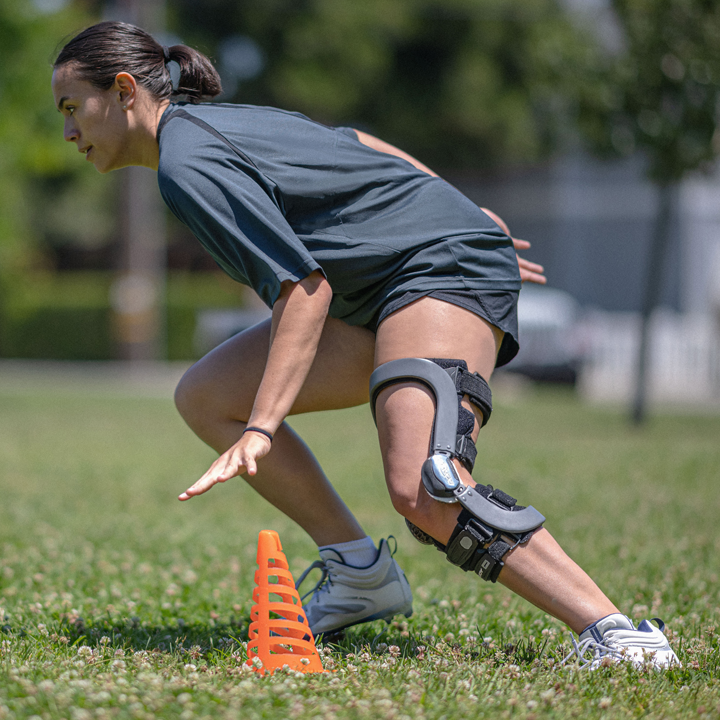
Sport-Specific Rehabilitation
The final stages of rehab must incorporate dynamic, sport-relevant tasks that restore confidence and performance. Elements include:
- Plyometrics and agility drills
- Balance and single-leg stability work
- Deceleration and change-of-direction tasks
- Simulated sports scenarios and return-to-play testing
Psychological Readiness is equally important. Athletes must trust their knee, feel strong, and have confidence in their ability to perform without fear.
Benchmarks for Return to Sport
- Limb symmetry index ? 90% on strength and hop tests
- Pain-free during high-demand tasks
- No joint effusion or signs of instability
- Full ROM and excellent neuromuscular control
- Psychological readiness confirmed with validated tools (e.g., ACL-RSI scale)
Conclusion: The Power of Quadriceps Recovery
Returning to sport after knee surgery is not just about healing—it’s about optimization.
By prioritizing the recovery of quadriceps strength and function, patients can dramatically reduce their risk of re-injury,
perform at a higher level, and enjoy sustained joint health.
Overcoming atrophy is both a science and an art, requiring diligence, personalization,
and integration of modern tools like NMES with traditional strength training.
With the right guidance, every patient—whether a weekend warrior or elite athlete—can return to sport stronger than before.