
Apr
PART 1of 3: Understanding Quadriceps Impairment After Knee Surgery
Introduction
Total knee arthroplasty (TKA) and anterior cruciate ligament (ACL) reconstruction are among the most widely performed orthopedic procedures globally. While these surgeries aim to restore function and alleviate pain, they frequently result in significant postoperative quadriceps impairment. This impairment poses a critical challenge for recovery, affecting mobility, independence, and long-term joint health.
This multipart article presents a comprehensive analysis of the mechanisms underlying quadriceps weakness, its functional implications, and the application of evidence-based rehabilitation methods, especially neuromuscular electrical stimulation (NMES).
Quadriceps Impairment Following Total Knee Arthroplasty
Initial Postoperative Period
The first month following TKA is a critical period for muscle performance, with studies indicating a loss of up to 60% of quadriceps strength. This loss stems from both neural and muscular factors and significantly influences recovery milestones.
Consequences of early quadriceps weakness include:
- Impaired mobility and balance
- Limitations in daily activities
- Increased risk of falls
- Slower rehabilitation progress
Primary Mechanisms of Quadriceps Impairment
1. Voluntary Muscle Activation Failure
- Neural inhibition
- Altered motor unit recruitment
- Reduced nerve signaling efficiency
- Pain-related inhibition
- Swelling-induced activation failure
This phenomenon, known as arthrogenic muscle inhibition, reflects the inability to fully recruit the quadriceps, despite adequate effort. Neural efficiency can be disrupted by surgery-related inflammation, joint effusion, or pain.
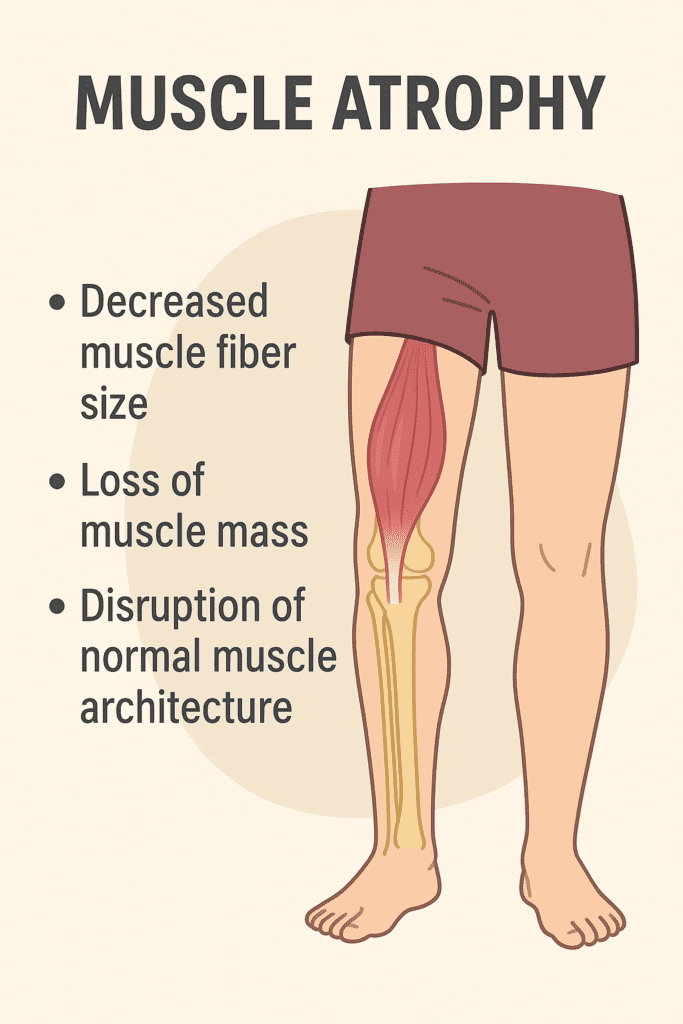
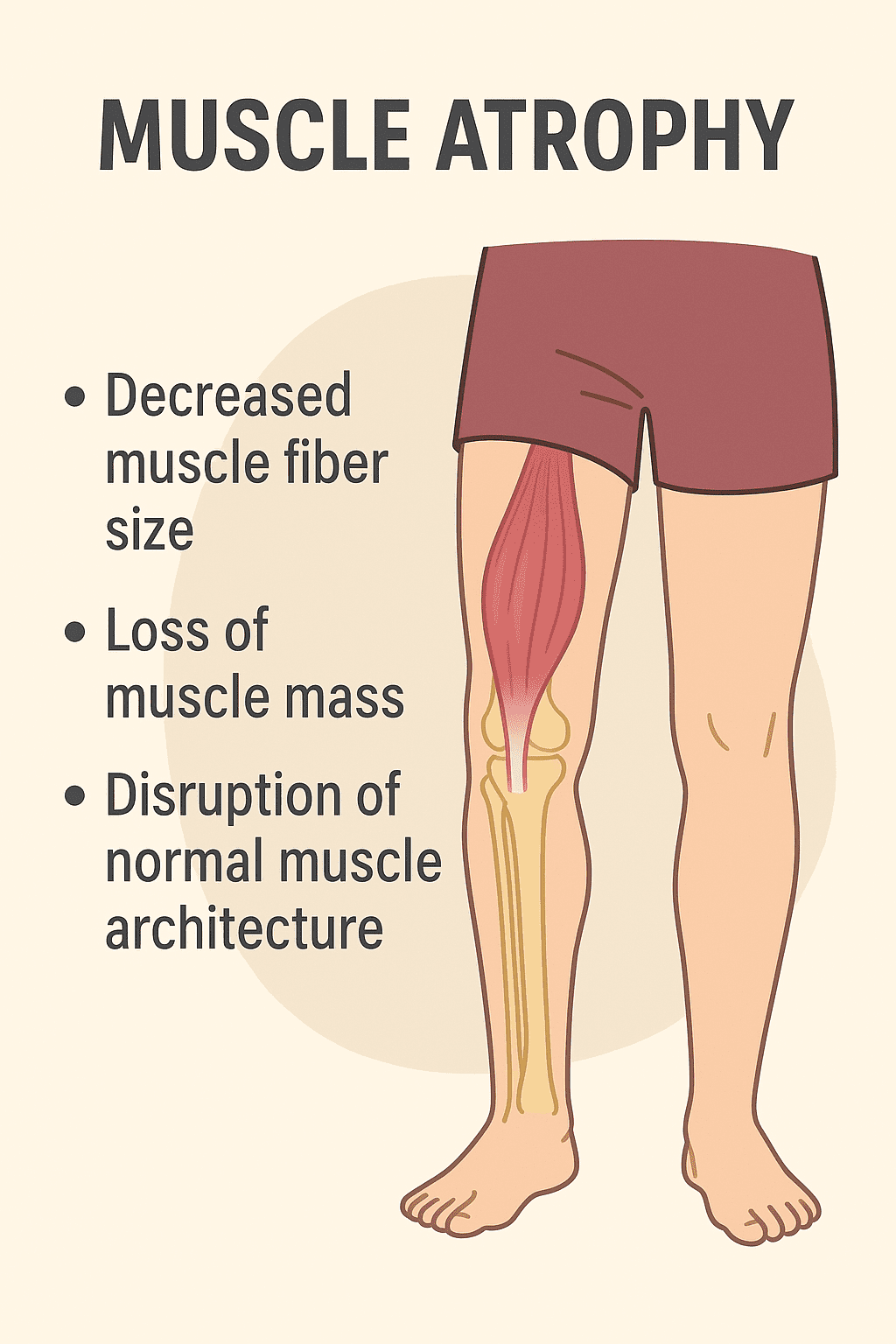
2. Muscle Atrophy
- Decreased muscle fiber size
- Loss of muscle mass
- Disruption of normal muscle architecture
- Changes in protein synthesis and breakdown
Muscle atrophy progresses rapidly without appropriate intervention. Decreased physical activity, altered neuromuscular recruitment, and pain avoidance behaviors all contribute to this process.
Mechanisms of Muscle Loss After ACL Surgery
a) Immobilization
- Limited joint movement
- Restricted weight-bearing
- Decreased use of the quadriceps
- Compensatory changes in gait and posture
While immobilization is necessary to protect graft integrity, it inadvertently encourages disuse atrophy and impaired neuromuscular engagement.
b) Reduced Activity Levels
- Activity restrictions during early healing
- Limited ability to perform exercises
- Reduced cardiovascular conditioning
- Psychological fear of reinjury
c) Pain-Related Factors
- Reflexive muscle guarding
- Difficulty with voluntary contractions
- Inhibited participation in rehabilitation
Pain contributes to neural inhibition, which can delay the recovery of functional strength and motor control.
Timeline of Muscle Loss After ACL Surgery
Early Phase (0–2 weeks):
- Acute inflammation
- Maximum pain and swelling
- Rapid decline in strength
- Initiation of rehabilitation begins
Middle Phase (2–6 weeks):
- Continued muscle atrophy
- Reduction in swelling and pain
- Emergence of better motor control
- Increased focus on voluntary contractions
Late Phase (6–12 weeks):
- Plateau in atrophy
- Focused strength training
- Return of muscle symmetry
- Higher-intensity rehabilitation begins